
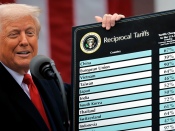
The year 2025 was marked by heightened volatility in the global maritime industry, largely driven by aggressive U.S. trade policy as a major disruptive factor. Decisions by the Donald Trump administration on tariffs and port-related measures reshaped trade flows, freight rates, and logistics strategies, in a context already strained by geopolitical conflicts, regulatory uncertainty, and profound structural changes in the shipping and port sectors.
Ahead of April 2, 2025, U.S. importers brought forward shipments from Asia—particularly from China—amid fears of a new tariff regime. This temporarily boosted demand for space on Transpacific services and generated volume peaks to both the U.S. West Coast and East Coast. Fleet utilization was pushed higher, resulting in a temporary increase in spot rates on Asia–U.S. routes, allowing shipping lines to halt the decline in freight rates and even implement selective increases.
On April 2, 2025, Donald Trump held what he called “Liberation Day,” announcing a broad tariff package featuring a baseline 10% duty on all imports, with significantly higher rates for countries running trade surpluses with the U.S., including tariffs of up to 104% on certain Chinese products. In maritime terms, the measure triggered a rapid contraction in cargo volumes between China and the U.S., with service cancellations, route diversions, and a sharp drop in demand for capacity as shipments were halted or postponed.
Subsequently, in mid-October, the U.S. began implementing port charges promoted by the USTR on vessels that are Chinese-owned, operated, or built. This move prompted reciprocal measures from China and increased operating costs and logistical uncertainty. The charges formally entered into force on October 14. However, on October 30, both powers agreed in Busan to a trade truce that suspended reciprocal port charges for one year and included tariff reductions, effective until October–November 2026. This provided temporary relief for the maritime industry, though it did not fully eliminate underlying uncertainty.
The influence of the Trump administration and geopolitics also extended to the port sector, after CK Hutchison put most of its global port business up for sale—around 43 terminals outside mainland China and Hong Kong, including the Balboa and Cristóbal operations through Panama Ports Company—in a transaction valued at close to US$23 billion, initially agreed with a consortium led by BlackRock and TiL/MSC. The deal received clear interest and political backing from the U.S., framed by concerns over China’s presence in strategic infrastructure linked to the Panama Canal.
China, however, responded by tightening regulatory scrutiny and demanding the inclusion of COSCO Shipping in the deal to safeguard its interests, delaying the transaction’s completion. This was compounded by local obstacles in Panama, including warnings over capacity concentration risks, creating a scenario in which the sale of these ports became subject to renegotiation.
Throughout 2025, the Red Sea and Suez Canal crisis remained a key disruptive factor for global maritime transport. Most major shipping lines avoided the route for much of the year due to Houthi attacks, depressing Suez transit volumes, forcing diversions via the Cape of Good Hope, and increasing voyage times, operating costs, insurance premiums, and freight rates, while severely impacting Egypt’s revenues.
Although gradual signs of de-escalation emerged over the course of the year, a return of transits has been constrained by extreme caution among shipping lines such as Maersk and CMA CGM, which have begun trial transits but remain far below pre-crisis levels. Looking ahead to 2026, a gradual recovery is expected, hinging more on the consolidation of shipowners’ confidence than on an immediate normalization.
In June, an additional risk emerged with Iran’s threat to potentially close the Strait of Hormuz amid its confrontation with Israel. This sparked significant alarm across the maritime and energy industries, heightening freight rate volatility, insurance premiums, and operational caution—particularly in crude oil and LNG transportation. Ultimately, the worst-case scenario did not materialize and the strait was never closed, but the episode underscored the high vulnerability of maritime trade to geopolitical risks.
In October 2025, during an extraordinary session of the IMO’s Marine Environment Protection Committee (MEPC), the organization decided to postpone until 2026 the adoption of its global emissions policy—the Net-Zero Framework, which includes a carbon pricing mechanism—due to a lack of consensus within the MEPC and pressure from the U.S. and Saudi Arabia, which challenged the proposed mechanism. The decision added uncertainty to the maritime industry by delaying key regulatory definitions, leading to postponed investments in alternative fuels and green technologies and increasing the risk of regulatory fragmentation across regions.
In November, MSC surpassed 7 million TEUs of capacity, consolidating its position as the world’s largest container shipping line by capacity following the delivery of the 16,000-TEU vessels MSC Salerno and MSC Grace. MSC achieved this milestone in just 15 months, driven mainly by newbuildings—799,000 TEUs—strong activity in the charter market, secondhand acquisitions, and minimal scrapping, resulting in exceptionally rapid net expansion. With more than 21% of global capacity, MSC widened its lead over Maersk to 2.4 million TEUs.
According to Sea-Intelligence data for November 2025, schedule reliability showed a global recovery, reaching 64.1%, with clear leadership from Maersk and Hapag-Lloyd, and particularly from the Gemini Cooperation alliance formed by the two carriers. Maersk ranked as the most reliable major carrier with 78.1% schedule adherence, closely followed by Hapag-Lloyd at 77.1%, while Gemini Cooperation achieved outstanding reliability levels of nearly 90% in both overall and commercial port calls, far surpassing other alliances and individual operators.
By MundoMaritimo
3722 registered companies, 51 countries, 85 sponsored companies
Customs Agents
Shipping Agencies
Storage and Warehousing
Shipyards
Shipping Companies
Marine Consultants and Surveyors
Cargo Agents
Port Companies & Terminals
Nautical Equipment
Loading and Unloading Agencies
Exporters
Importers
Engineering, Certifications, Surveyors
Organizations
Other related Activities
Fishing Companies
Spare Parts
Puertos Terrestres, Zonas Extraportuarias
Air Transportation
Overland Transport
Tourism
La política que en el presente documento se indica, tiene por objeto informar a los usuarios de MundoMaritimo sobre el proceder de nuestra empresa respecto del tratamiento de los datos de carácter personal recogidos a través de nuestros portales.
1 | Recolección:Cuando Usted requiere los servicios de MundoMaritimo, se recoge información personal como su nombre, rut, dirección, etc, a través de correo electrónico o formularios. Nuestro sitio no utiliza actualmente cookies, para registrar o recabar información del usuario, pero, podrá en cualquier momento y a su sola discreción y sin necesidad de autorización, utilizarlas, comprometiéndose dar el tratamiento y protección señalado precedentemente a dichos datos.
Para qué se utiliza la información recolectada.Toda la información recolectada de los usuarios en MundoMaritimo tiene por objetivo:
(1) Brindar servicios, contenidos y publicidad personalizada al usuario en su navegación por los portales de MundoMaritimo
(2) Realizar estudios internos sobre los datos demográficos, intereses y comportamiento de nuestros usuarios. La información se utiliza para entender y servir mejor a nuestros usuarios.
2. Uso:Estos datos que usted proporciona libre y voluntariamente, tienen por objeto dar un mejor servicio, información y utilidades a nuestros usuarios. Usted tiene el derecho de no aceptar entregarlos, renunciando a los beneficios que nuestro sitio web entrega.
Si decide aportar dichos datos, nos obligamos con usted a mantener una conducta clara y regular, sometida a la política que a continuación expresamos, de la cual usted es informado y que acepta.
Nuestra política respecto de los datos recogidos es la siguiente:
La responsabilidad por la veracidad de los datos recogidos por esta vía, es exclusiva del usuario.
3. Seguridad:Mantenemos una base de datos Off-Line, la que asegura a sus clientes total privacidad, respecto de los datos proporcionados a MundoMaritimo.
Por otra parte, una reconocida empresa externa proveedora de servicios de conectividad y hosting debidamente certificada, "aloja" nuestros sitios en sus servidores web, los 365 días del año, los siete días de la semana y las veinticuatro horas, lo que asegura que nuestro sitio tenga la menor posibilidad de "caída" en la web o intrusiones de "hackers" que vulneren nuestro Portal.
4. Calidad:Sin perjuicio de las responsabilidades que al usuario le corresponden, MundoMaritimo tendrá especial cuidado al recolectar, mantener, usar, publicar o distribuir la información personal vinculada a los usuarios y visitantes, verificando que los datos sean correctos, completos y adecuados para cumplir con los fines para los que serán utilizados.
5. Modificación:El usuario que haya entregado previamente datos o información personal a MundoMaritimo, podrá solicitar su modificación, corrección o eliminación, enviando un correo electrónico a [email protected], indicando su nombre, rut, dirección, teléfono, y expresando claramente que información de la que hubiere entregado desea modificar o eliminar.
En todo caso, y como medida de seguridad, MundoMaritimo se reserva el derecho de verificar la autenticidad de la comunicación.
6. Publicación e intercambio:MundoMaritimo, como norma general, no transferirá, cederá, venderá o de otra manera proveerá sus datos de carácter personal a persona alguna. MundoMaritimo podría transferir, revelar o ceder los datos recopilados a sus usuarios, a terceros de acuerdo a las siguientes circunstancias:
(1) En caso de tener la aprobación explícita del usuario, sus datos de carácter personal pueden ser usados por terceros para efectos de realizar marketing directo, llamadas telefónicas, para enviar correos electrónicos, entre otros. El usuario tiene el derecho y la opción de poder denegar la recepción de esta información por parte de terceros.
(2) En el caso de "contactos de negocios", sus datos de carácter personal pueden ser usados por terceros sólo para efectos de poder completar y ejecutar la transacción que motivó la entrega o recolección de esa información.
(3) Aquella información que sea requerida por la ley, una orden judicial u otro procedimiento legalmente válido que así lo exija.
7. Uso de información vinculada a terceros:En caso de tener la aprobación correspondiente, MundoMaritimo usará la información del usuario para comunicarle e informarle, a través del correo electrónico, acerca de:
(1) Modificaciones a sus servicios o productos existentes, aparición de nuevos servicios o productos, u otros especificados por el usuario.
(2) Información, ofertas o cualquier tipo de promoción de marketing que MundoMaritimo pueda otorgarle al usuario.
(3) Sugerencia por parte del usuario acerca de ,"recomienda esta noticia a un amigo"
8. Servicios prestados por terceras empresas en el sitio:Eventualmente, MundoMaritimo, puede contratar los servicios de empresas externas, con el fin de entregar nuevos servicios y productos a través de este sitio web. La información recabada en su caso por dichas empresas, se regirá por el acuerdo del usuario de la misma.
Si tiene alguna duda o pregunta sobre nuestra política de privacidad, le rogamos contactarse a [email protected]
9. Publicidad asociadaRespecto a los servicios de anuncios publicitarios o información promocional, con el objeto de presentarle servicios asociados que puedan ser de su interés, tenemos vínculos con otras compañías a las que permitimos colocar publicidad en nuestras páginas. Estas compañías podrían individualmente solicitar su información directamente con usted, siendo exclusiva responsabilidad de ellas el manejo y manipulación de esta información.
Finalmente, MundoMaritimo no garantiza la privacidad de la información personal del usuario, si éste suministra o difunde información en guías telefónicas públicas, reportajes de prensa, publicaciones, zonas de chateo, boletines u otras similares. Dicha información podrá ser recopilada por terceros, con o sin su consentimiento. El usuario revela esa información bajo su responsabilidad.